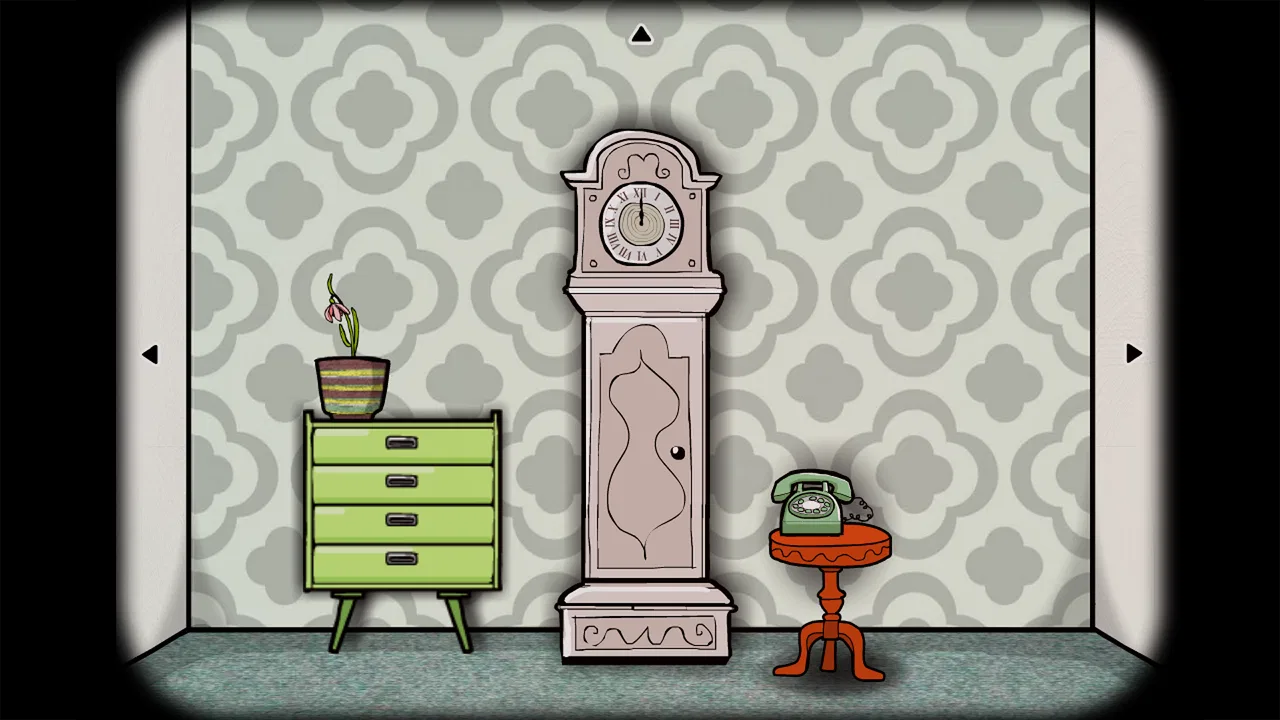
Cube Escape Collection
- 4.6
- Rating
- 5.00M
- Installs
- Free
- Price

 Analysis by App-foxy
I went into Cube Escape Collection expecting a small set of strange point-and-click puzzles, but it feels more like an invitation into a much larger mystery. Rusty Lake has built an adventure game around unsettling rooms, symbolic objects, and clues that rarely explain themselves. The result is unusual: it can be relaxing when I am carefully inspecting a scene, yet tense when I realize I have been carrying the wrong assumption through several puzzles.
The collection is free to start, carries a Teen content rating, and has become a very established choice for players who enjoy atmospheric puzzle adventures. It has a 4.6 average from around 64 thousand ratings and more than 5 million installs, which matches my impression that this is not an obscure experiment but a well-known entry point into the Rusty Lake universe. I would recommend it to someone who likes solving odd little mysteries at their own pace, especially on a phone or tablet.
My main warning is equally simple: this is not a casual game in the usual sense. It does not constantly tell you what to do, and some clues only become meaningful after you have examined several unrelated-looking details. If you want bright visuals, a clear mission marker, or quick action, this collection may feel deliberately stubborn. If you enjoy being confused for a while and then suddenly seeing the connection, it has much more to offer.
You May Also Like

 Blood Strike: 2.5 Anniversary
Blood Strike’s Loadouts Turn Every Drop Into a Tactical Gamble
A close look at Blood Strike’s custom loadouts: how fast access to signature weapons reshapes its battle royale rhythm, rewards preparation, and narrows the gap between fights.

 Pandora - Music & Podcasts
Pandora’s Music Is Easy to Start, but Harder to Recover
Pandora’s strength is its low-effort path from a seed to a station. Its weak spot is how much confidence it asks you to place in connection, setup, and quiet recovery.

 8 Ball Pool
 Is Built on Rivalries, Rematches, and Routine
A close look at the rivalries, rematches, shared routines, and unanswered safety questions that turn a quick pool match into a persistent mobile community.

 Samsung Music
’s Quiet Strength Is Playing What You Already Own
Its reach comes less from spectacle than from dependable access to a personal library. That simplicity is both the app’s strongest retention engine and its ceiling.

 AccuWeather: Weather Radar
AccuWeather Review: A Quick, Clear Forecast for Everyday Decisions
For everyday plans, the best forecast is the one you can understand quickly. AccuWeather makes rain timing, radar, and local conditions easy to act on, with a few trade-offs.

 Hill Climb Racing
Why Hill Climb Racing Still Turns Crashes Into One More Run
A tiny car, a bumpy hill and one more upgrade: Hill Climb Racing keeps resurfacing because its simple chaos makes every near-miss feel personal.
More From Our News Desk



Where the puzzles usually make players stop
The first friction point is not installation. It is learning how to look at a Rusty Lake scene. I initially searched for obvious objectives, but the game often rewards a slower inspection of the entire room. A drawer, picture, container, or unusual shape may matter later even when it seems decorative at first. I found it more useful to treat every visible object as a possible piece of a chain rather than tapping only the items that look interactive.
That design creates a distinctive rhythm. I might spend several minutes trying combinations, then discover that the real problem was not the combination itself but an earlier clue I had overlooked. The collection rarely feels like a conventional escape room with one neat path from entrance to exit. Instead, it asks me to build a private map of symbols, locations, and relationships.
Players can also get stuck because the games encourage experimentation without making every experiment feel productive. When I was unsure, I used a notebook outside the app and wrote down symbols in the order I found them. This was especially helpful when a visual pattern appeared in one place and seemed to relate to a lock somewhere else. The small act of recording details reduced repeated tapping and made the puzzles feel more deliberate.
Another common obstacle is assuming that an object must be used immediately. In this collection, a clue can become useful only after another discovery changes its meaning. I learned to leave a suspicious item in mind instead of repeatedly forcing it into every available slot. That approach saves time and prevents the familiar puzzle-game mistake of treating a strange object as a simple key.
The atmosphere can add to the confusion. Rusty Lake’s world is intentionally eerie, and the imagery sometimes feels more symbolic than realistic. If a scene seems dreamlike or uncomfortable, that is part of the experience rather than a sign that something has gone wrong. I would not choose this game for a very young player, and the Teen rating is worth taking seriously if you are selecting something for a family device.
What to check before blaming the game
Before playing, I would make the basic setup as calm as possible. The game supports devices running Android 6.0 or later, so checking the operating system is the first practical step. A compatible phone can still deliver a frustrating session if it is nearly full, overloaded with background tasks, or switching aggressively between apps. I prefer closing anything unnecessary before starting a puzzle because losing concentration is more damaging here than in a quick arcade game.
The current version is 1.4.13, and using the current store version is a sensible first check if something behaves unexpectedly. I would also restart the app after an update rather than immediately opening and closing it several times. That simple reset often separates a temporary loading problem from a genuine puzzle issue.
Because this is a collection rather than one short standalone scenario, I would plan storage and attention accordingly. The practical benefit is that I can move between different mysteries when one has reached a difficult point. The trade-off is that the overall experience can feel less tidy than a single linear adventure. I recommend beginning one episode with enough uninterrupted time to remember its visual language instead of jumping in for only a few seconds between other tasks.
The game is free, but in-app purchases are listed at $2.99 per item. That matters if you are installing it for someone else or trying to keep every purchase disabled. I would check the device’s purchase controls before handing over the phone, especially when a child or another family member may explore the collection independently. The free entry point makes it easy to try, while the purchase option means it is still worth knowing how the device handles optional spending.
I also suggest checking sound and notification settings before starting. The unsettling presentation works better when the session is not constantly interrupted, and sudden notifications can make it harder to remember a clue. This is not a performance claim; it is simply a practical way to protect the kind of concentration these puzzles demand.
Recovering a stalled workflow without ruining the puzzle
When I am stuck, my first recovery step is to stop tapping randomly. Random interaction can create the feeling of activity without producing understanding. I instead revisit every location, note which objects have changed, and separate facts from guesses. For example, “this symbol appeared beside the picture” is more useful than “the picture probably opens the box.” Keeping those two thoughts apart makes it easier to correct a bad theory.
My second step is to look for incomplete actions. A puzzle may have given me a code, sequence, or visual arrangement, but I may have used only part of it. I check whether I have actually applied the clue to every plausible mechanism, without assuming that the most visually obvious lock is the correct destination. This is one of the collection’s best habits: it teaches careful observation rather than quick pattern matching.
I also recommend taking a short break before searching for outside help. After staring at the same screen, I tend to ignore the most visible detail because my brain has already categorized it as irrelevant. Returning later often reveals a missing interaction immediately. If I do need a walkthrough, I would look up only the next small step rather than the entire solution. Full solutions remove the satisfying connection between the clue and the action, while a limited hint can restore the intended path.
A useful personal workflow is to keep a separate note for each mystery. I write down object locations, unusual symbols, and combinations I have already tested. This prevents me from repeating the same unsuccessful sequence and is particularly valuable if I pause for several days. The collection is better suited to remembered details than to constant restarting, so a short written record makes mobile play much more comfortable.
If progress appears to vanish, I would first reopen the same episode and check whether I am looking at the correct scene. I would avoid clearing app storage or reinstalling as an early response, because those actions can affect local progress depending on the device and app behavior. Safe troubleshooting starts with closing and reopening the game, restarting the device, checking for the latest version, and confirming that the phone has enough free space. More drastic steps should come only after considering whether they could remove saved progress.
That caution is important because puzzle progress has more value than it might in a disposable arcade title. I would not experiment with system cleanup tools while a difficult episode is unfinished. If the game opens normally but a specific action seems impossible, I would first retest the clue and the interaction rather than treating the challenge as a technical failure.
When the app is not the cause of the problem
Not every frustrating moment is an app defect. A touch screen can fail to register a precise tap because of a dirty display, a thick protector, or a finger landing slightly outside the intended object. In a game where one small item may be the key to progress, that can look like a broken puzzle. Cleaning the screen and trying the interaction again with a deliberate tap is a worthwhile first check.
Device interruptions can create similar confusion. Incoming calls, notification panels, battery-saving behavior, or switching to another app may leave me unsure whether I completed an action. I handle this by returning to the room, checking the object’s current state, and repeating only the smallest necessary step. That is safer than restarting the whole episode or assuming that every change is permanent.
Performance can also be affected by the phone rather than the collection itself. If several demanding apps are open, the device is hot, or storage is nearly full, closing background apps and restarting the phone is a reasonable general fix. I would not promise that this solves every issue, but it removes common sources of instability without changing game data.
There is also a human cause that is easy to overlook: playing while distracted. I have made more mistakes in this collection when listening to a conversation or trying to solve a puzzle during a commute. The game’s clues are often visual and contextual, so missing one small detail can send the entire session in the wrong direction. A quiet ten-minute session is usually more productive than half an hour of hurried tapping.
For the same reason, this is not my first recommendation for someone who wants a game that explains every objective. A conventional hidden-object adventure may be better for a player who prefers explicit prompts, while an action adventure may suit someone who needs movement and immediate feedback. Cube Escape Collection earns its place by withholding certainty, so that same quality becomes a weakness when clarity is the priority.
How it fits into everyday play
My favorite use case is a short evening session with a notebook nearby. I can investigate one room, record a few patterns, and stop before the experience becomes tiring. The collection also works well for two people sharing a device: one person notices visual details while the other tests combinations. I would keep the phone between us and discuss theories rather than passing it back and forth constantly, because the puzzles benefit from a shared view of the whole scene.
It is less suitable for background play. Music, podcasts, or frequent conversation can weaken the experience because the game depends on noticing small visual relationships. It is also not ideal if you need something that can be played with one hand while doing another task. The interaction is simple enough to understand, but the thinking is not something I would want to divide between several activities.
Compared with typical mobile adventure games, this collection is more compact in presentation and more demanding in interpretation. It does not rely on a large map, rapid combat, or a stream of rewards to hold attention. Compared with ordinary escape-room games, it feels stranger and less literal, with a stronger emphasis on the Rusty Lake setting. That makes it memorable, but it also means players who dislike surreal imagery or ambiguous storytelling may prefer a more straightforward mystery game.
The developer, Rusty Lake, has made a recognizable style out of this balance between quiet interaction and disturbing symbolism. I would not describe the collection as technically complicated to play. Its challenge comes from connecting details, remembering what has changed, and accepting that the answer may not be obvious on the first inspection. That is why it can appeal to experienced puzzle fans even though the controls themselves are accessible.
Who should install it and who should pass
I think this is a strong choice for anyone who enjoys point-and-click adventures, visual riddles, and stories that leave room for interpretation. It is especially good for players who like keeping notes, revisiting scenes, and discussing theories with a friend. The free price makes trying it less of a commitment, while the Teen rating gives a useful warning about its unsettling tone.
I would hesitate to recommend it to a player looking for a bright, cheerful pastime or a game that can be understood instantly. People who become irritated when a clue is not clearly signposted may spend more time fighting the design than enjoying it. I would also choose another game for very young children, for fast sessions, or for anyone who wants a clear sequence of objectives and constant confirmation that they are progressing correctly.
The collection’s popularity is understandable, but a large audience does not remove its individual quirks. The same opacity that makes a solution satisfying can make the opening feel slow. The same eerie presentation that gives the world personality can make it uncomfortable. I appreciate that it commits to its style instead of smoothing every edge, although I would have preferred a gentler way to recover from a missed clue.
My practical verdict after working through the friction
Cube Escape Collection is worth installing if you want an atmospheric adventure that treats observation as the main skill. I found the best results came from approaching it patiently: check the device first, play without distractions, record symbols, and recover from a dead end by reviewing evidence rather than tapping faster. Those habits turn the collection from a confusing set of rooms into a series of carefully connected investigations.
The free entry point is a real advantage, and the optional items priced at $2.99 each are worth keeping in mind when managing purchases. The Teen rating is also relevant because the mood is unsettling rather than purely playful. With Android 6.0 or later required, most compatible users can at least assess the experience without committing to a paid download.
My final recommendation is positive, with a clear condition: choose it for mystery and atmosphere, not convenience. I would recommend it to a friend who enjoys unusual puzzle design and is willing to sit with uncertainty. I would steer someone else toward a more guided adventure if they want obvious objectives, rapid progress, or light entertainment. For me, the collection succeeds because its strange world asks me to pay attention—and rewards me when I finally understand why a small detail mattered.
Best suited to patient puzzle players who enjoy solving the mystery themselves, not being led through it.
FAQs for Cube Escape Collection
01What is Cube Escape Collection?
Cube Escape Collection is a point-and-click puzzle adventure bundle from Rusty Lake that brings together several atmospheric escape-room games in one package. Each chapter has its own strange setting, characters, and mystery, but the stories are connected through recurring events and symbols. The collection is designed for players who enjoy exploration, observation, logic puzzles, and unsettling storytelling rather than fast-paced action.
02Is Cube Escape Collection suitable for beginners?
Yes, beginners can enjoy Cube Escape Collection, although some puzzles may require patience and careful observation. The game generally teaches its interaction style naturally: you tap objects, collect items, combine clues, and experiment with the environment. A few solutions are intentionally unusual, so players who are not familiar with escape-room games may occasionally need hints or a walkthrough. The relaxed pace makes it approachable overall.
03Does Cube Escape Collection require an internet connection?
The main gameplay in Cube Escape Collection can generally be enjoyed offline after the application has been downloaded and installed. This makes it convenient for playing during travel or in places with limited connectivity. However, internet access may still be useful for downloading updates, checking store information, or looking up assistance if a puzzle becomes difficult. Availability and requirements can vary slightly by Android or iOS version.
04Are the games in Cube Escape Collection connected to each other?
Yes, the games are connected through the wider Rusty Lake universe. Although each chapter presents a separate location and set of puzzles, recurring characters, objects, memories, and mysterious events gradually reveal a larger narrative. You do not need to understand every story detail to play the collection, but experiencing the chapters in order can make the timeline and relationships easier to follow and makes the overall mystery more rewarding.
05Does Cube Escape Collection contain ads or in-app purchases?
Cube Escape Collection is presented as a premium collection rather than a typical free-to-play puzzle game, so the experience is focused on uninterrupted gameplay instead of constant advertising or energy systems. Store policies, pricing, and included content can change, so it is still wise to check the current Google Play or App Store listing before downloading. Confirming the edition also helps ensure that all intended chapters are included.
Pros
- Nine connected escape-room games in one convenient collection.
- Surreal storytelling creates a memorable
- unsettling atmosphere.
- Most puzzles are clever without requiring fast reflexes.
- Offline play makes it suitable for travel or limited connections.
- Distinct visual styles and settings keep the separate chapters engaging.
Cons
- Some puzzles rely on obscure clues rather than clear logic.
- The eerie themes may be uncomfortable for younger players.
- Progress can feel repetitive when switching between similar rooms.
- Hints may be needed when item interactions are not obvious.
- The collection offers limited replay value after solving every chapter.

Cube Escape Collection
Gallery